
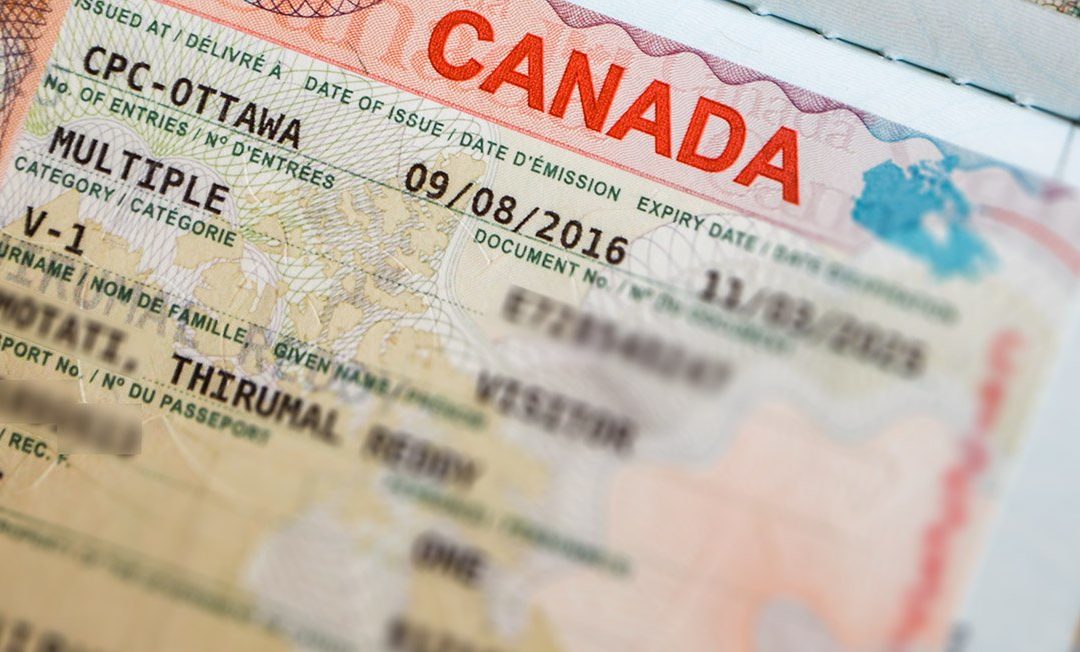
What is A Temporary Resident Visa?

What is A Temporary Resident Visa?

What is A Temporary Resident Visa?

So, What Exactly is a Temporary Resident Visa to Canada?

A Temporary Resident Visa (TRV) represents a number of categories that all have in common a temporary stay nature. It is given to people who wish to visit Canada (visitor visa), or those who wish to study in Canada (Study Permit), or those who want to work in Canada (Work Visa), in addition to few other cases.

Having a TRV issued to you, shows that you have met the requirements for admission to Canada as a temporary resident in the category of your request. The visa will be stamped in your passport and will form the legal document of you being present inside Canada for the period allowed by the visa.

Another type of Temporary Resident Visas is the Super visa, which can be used by Canadian citizens or Canadian permanent residents to sponsor their parents for PR for a rather extended periods of temporary residence. The Super Visa program allows for family members to stay in Canada for long-term on a multiple entry visa that can last up to 10 years and which has to be renewed after 2 years. This program was created to help offset the pressure on parent sponsorship which usually take a long time and works through an annual quota opening and closing -mostly- in the month of February of every year

Here are few other types of Temporary Visas:

  • A diplomatic visa: They are non-immigrant visas that are meant to show that Canada intends to accord official status to the passport holder. Diplomatic and official visas are granted to persons entitled to diplomatic or consular privileges and immunities who intend to travel to Canada for an official purpose or to pass through Canada on the way to an assignment in another state. This is under international and domestic law.
  • Courtesy visas: Visas that are given to persons of diplomatic rank coming to Canada for tourist purposes, to members of the International Air Transport Association (ITRA), to members of a trade mission visiting Canada, and to well-known visiting professors coming to Canada to attend conferences. this type of visa is issued in any type of passport to persons who require visa or who are normally visa-exempt.
  • Facilitation visas: Visas that are only single-entry and valid for the period needed to travel when new, replacement or emergency passports cannot be issued in a sufficiently timely fashion. It is also issued when the travel is urgent. Such cases include children who are born in Canada  to foreign nationals who have returned to their country and do not wish to assert their Canadian citizenship acquired at birth, for children going through citizen adoption overseas, and for presumptive Canadians under the age of 18 who are coming to Canada wither to reside with their Canadian parent(s) or for humanitarian and compassionate reasons as determined by the visa officer.

An electronic travel authorization (eTA) is also needed for most visa-exempt foreign nationals travelling or transiting through Canada by air.

If you would like to come to Canada on a temporary basis, and wish to know more, CONNECT WITH US today to discuss your opportunities further.

Stay In Touch


Start Your Immigration Plan NOW!


Contact Us

Our Location

VGlogal Immigration

Welcome to our office at VGlobal Immigration

VGlobal Immigration Inc.

200-55 Village Centre Place,

Mississauga, ON - L4Z 1V9

Canada

Email: ehab@vglobal.ca 

How Do I Sponsor Someone to Canada

How Do I Sponsor Someone to Canada

If you are a Canadian citizen or a Permanent Resident of Canada, and your family is not residing with you, there’s an opportunity for you to reunite with them if you qualify as a sponsor. This is one of the principles supported by the Canadian immigration law. The legal question here is:

  1. Are you eligible to be a sponsor?
  2. Are your relative’s eligible to be considered in the family member class?

Let’s shed some light on both questions briefly here:

Am I Eligible to Sponsor a Family Member?

In order to be eligible to sponsor for a family member, the following elements are usually examined:

  • Your Age: You should be at least 18 years old
  • Your Status: You must be either a Canadian citizen, a person registered in Canada as an Indian, or a permanent resident living in Canada
    • If you are a Canadian citizen who is living outside Canada, you must show that you plan to live in Canada when your sponsored relative becomes a permanent resident
    • If you are a permanent resident living outside Canada, you simply cannot sponsor any of your relatives unless you come back and settle down in Canada
  • Financial Status:
    • You must be able to prove that you are not receiving any social assistance (for reasons other than disability)
    • You will also need to prove that you have enough income for the basic needs of your children and any dependent children of a dependent child

When Am I NOT Eligible to be a Sponsor?

There are specific cases that would prohibit an individual from being considered eligible to sponsor a relative. Those cases are specifically the following:

  • If you have failed to pay an immigration loan, a performance bond or family support payments
  • If you have failed to provide for the basic needs of a previously-sponsored relative who received social assistance
  • If you are under a removal order
  • If you are in penitentiary, jail, reformatory or prison
  • If you are receiving social assistance for a reason other than a disability
  • If you are still going through the process of bankruptcy
  • If you were sponsored by a spouse or partner and you became a permanent resident less than five years ago
  • If you have sponsored a previous spouse or partner and three years have not passed since this person became a permanent resident
  • If you have already applied to sponsor your current spouse, partner or child and a decision on your application hasn’t been made yet
  • If you were convicted of a violent or sexual offence or an offence that caused bodily harm to a relative, or you attempted or threatened to commit any of these offences

Is My Relative Eligible as a Family Member Class?

On the other hand of eligibility, when addressing family sponsorship, you need to ensure your relative qualifies as a family member. This carries a basic question, Who are my Family Members?

Immediate family members are

  • Spouse
  • Common-law partner
  • Conjugal partner
  • Dependent child

Non-immediate family members will be discussed in an upcoming article.

Each of the immediate family members mentioned above should also qualify through some criteria, which we will explain here

  • In order to sponsor a spouse, common-law partner or conjugal partner, he or she should be at least 18 years old.
  • Your relationship must be genuine (real) and wasn’t entered into just to get permanent residence status in Canada
  • If you are sponsoring children, you must submit a complete set of application forms and documents for each child separately


If you would like to know more, CONNECT WITH US today to discuss your opportunities further.

How Do I Qualify to Canadian Immigration

How Do I Qualify to Canadian Immigration

How Do I Qualify to Canadian Immigration

The most asked question ever when it comes to immigration to Canada is this:

How do I qualify for Canadian immigration?

Let’s first start by explaining that Canada has a robust immigration system that accommodates numerous categories and enables an average of 300,000 new Canadians to join our community each year. In fact, the government of Canada has recently announced its intention to accommodate 1 million immigrants between the years 2018 and 2020. The largest portion of that number is dedicated to the Skilled Workers.

Canada’s economy is strong and steadily growing. Therefore, if you have a certain profession or specialty that enables you to contribute to Canada’s economy, you might have a good opportunity to immigrate to Canada as a skilled worker. The Skilled Worker immigration program is the Federal Government’s main immigration program. Provinces of Canada has its own Provincial Nomination Programs (known as PNPs), but each of them has its own eligibility criteria, which is more or less close to the Federal Program and eventually links with it at some point.

Therefore, it is useful to focus in the answer to this question on the main eligibility for the Federal Skilled Worker program, so let’s get down to it.

Each applicant is usually evaluated on many factors, on a total score of 100. You need to score a minimum of 67 points on that scale to be eligible to apply. The 6 main factors you are normally evaluated when calculating your eligibility score are explained here:

Language Skills:

Your ability to write, read, listen and speak English, French or Both can give you up to 28 points. You will need to provide current results of a recognized language proficiency test in either languages (or both if you can), Needless to say, the higher your score is, the more points you collect under the language proficiency factor. It is therefore always the one factor that is basically controllable as you can always redo a language proficiency exam and score higher results, to increase your eligibility score.

Education:

The level of education you have achieved in life counts for up to 25 points of the scoring scale. The higher your educational credentials are, the more points you will score. Your Educational Credentials will need to be assessed by a Canad recognized agencies (There’s a hand-full of them) before you can be granted the points for education. This process is called ECA (Educational Credentials Assessent).

Professional Experience:

Your past work experience can grant you up to 15 points out of the total 100 points. The experience that counts is any paid and full time work experience during the last 10 years. If you have worked 6 years or more during the last 10 years prior to applying to immigrate, you will be eligible for the entire 15 points. You will also be required to prove this experience by obtaining a Canada recognized proof of professional experience when the time comes for you to submit your actual documents

Age:

Your age is also a determining factor in your eligibility and it counts for a maximum of 12 points on the eligibility scale. The minimum age of application to immigration to Canada is 18 years old. The age that receives 12 points is between 18 and 35 years old. Once you pass the age of 35, you lose 1 point for each year until the age of 47, where you receive 0 for this element.

Arranged employment in Canada:

If you have a valid job offer in Canada, you can gain up to 10 points on the eligibility score. A valid job offer has its own criteria. It should be for at least 1 year and represents a full-time work “minimum 30 hours/week”. It must not also be for a seasonal job and must be issued from an employer who is not on the banned list

Adaptability:

The government of Canada gives weight to your possible ability to integrate quickly and easily with the Canadian community. You can therefore gain up to 10 points on the eligibility score if you demonstrate one or more of the following adaptability factors:

  • Your spouse or common-law partner has a good language level in English or French (Your spouse will have to prove their language proficiency in the same way you do)
  • You have previously finished an academic study program in Canada that is at least two academic years of full-time study.
  • Your spouse or common-law partner has finished an academic study program in Canada that is at least two academic years of full-time study.
  • You have worked before in Canada for at least 1-year, full-time work in one of the approved positions referred to above
  • Your spouse or common-law partner has worked for at least 1-year, a full-time work in one of the approved positions.
  • You earned points under factor no. 5 above (Arranged employment in Canada)
  • You or your spouse or common-law partner has blood relatives who live in Canada, 18 years or older and are either Canadian citizens or permanent residents. Blood relatives are:
    • A parent
    • A grandparent
    • A child
    • A grandchild
    • A child of a parent (sibling)
    • A child or a grandparent (aunt or uncle)
    • A grandchild of a parent (niece or nephew)

If you would like to know more, CONNECT WITH US today to discuss your opportunities further.

Stay In Touch

Start Your Immigration Plan NOW!


Contact Us

Our Location

VGlogal Immigration

Welcome to our office at VGlobal Immigration

VGlobal Immigration Inc.

200-55 Village Centre Place,

Mississauga, ON - L4Z 1V9

Canada

Email: ehab@vglobal.ca 
Pin It on Pinterest